psleoral.sg › PSLE English Oral 2026
PSLE English Oral 2026: the dates, the format, and what to do in the last week
The oral exam is the first paper of the PSLE, and it comes six weeks before everything else. Here is what is confirmed, what changed in 2025, and how to spend the final days.
Key dates
| Component | Date |
|---|---|
| Oral examinations English and Mother Tongue | Wed 12 & Thu 13 August 2026 Sessions 8.00am – 1.30pm |
| Listening Comprehension | Tue 15 September 2026 |
| Written papers | Thu 24 – Wed 30 September 2026 |
| Results | Tentatively 24 – 25 November 2026 |
Your child's school confirms the exact reporting time, venue and session — the national timetable only fixes the days. Always check seab.gov.sg for the official calendar.
What the oral is worth
From the 2025 PSLE onwards, English Oral counts for 40 marks — 20% of the English Language grade, up from 30 marks and 15% before. That is a one-third increase in how much the oral affects the final Achievement Level.
The practical point: the conversation is worth more than the reading. If practice time is limited, it belongs to the conversation.
What changed in 2025
- The reading passage now opens with a given situation — a line or two setting the purpose, audience and context. The reading has to match that tone.
- The conversation stimulus is a real photograph, not a poster or illustration.
- Sub-prompts have been removed. The three questions are independent, and each needs a complete answer first time.
- The reading passage and the photograph are no longer thematically linked.
The three questions
Each one asks for a different shape of answer. Practising all three the same way is the most common mistake.
Q1 — Describe the picture
Look, name, explain. Two or three specific observations beat one general one, and one closer detail nobody else would notice lifts the whole answer.
Q2 — Relate it to yourself
A real story from your own life. Say what happened, what you did, and what changed afterwards. The last part is what examiners are listening for.
Q3 — Give your opinion
Take a clear stand, give your strongest reason, acknowledge the other side, then close properly. Never open with "maybe".
The last seven days
Short and daily beats long and occasional. Ten minutes is enough.
- One drill, full lengthAll three questions, no stopping to correct. You are finding the weak spot, not fixing it yet.
- Q2 only, three different drillsPersonal stories are where most children freeze. Build a small bank of real memories that can stretch to fit many topics.
- Reading aloud with the given situationRead the preamble first, then read the passage in that tone. A speech and a diary entry should not sound the same.
- Q3 only, three drillsPractise taking a stand in the first sentence. "I feel that…" — never "maybe".
- One full drill, recordedPlay it back together. Children hear their own trailing sentences far better than they hear yours.
- Two drills, relaxedNo corrections today. Confidence is worth more than one extra technique.
- RestRead something aloud for five minutes. Sleep early. Nothing new.
The one thing that doubles most answers
After your child finishes an answer, wait five full seconds, then ask "why?" once. That single word usually produces more than any amount of coaching. The silence before it is where the thinking happens — resist filling it.
About "past year topics"
SEAB does not publish past oral photographs. Every list of previous topics circulating online — including the year-by-year tables on tuition sites — is reconstructed from what parents and children remembered after walking out of the exam hall. The compilers say so themselves.
Those lists are not worthless, but they are recollections, not records. Descriptions of the same photograph differ between sources. Treating them as a question bank is the mistake: a child who has memorised twelve "likely topics" and meets a thirteenth has nowhere to go.
The one detail with reasonably consistent reporting is that both 2025 papers used food-related photographs — reported as an ice cream cart and a hawker centre. Even that is worth holding loosely. One year is not a pattern, and SEAB has just spent a format overhaul making the exam harder to predict.
What is actually predictable
Not the topic — the shape. An everyday Singapore scene with a small decision or moment of consideration inside it, and three questions that always run picture → personal → opinion. A child who can handle that arc handles any photograph. That is what practice should build.
Our 5 picks for the 2026 oral
These are the five we would practise first — a recommendation about where to spend limited time, not a prediction of the paper. We chose them because each is an ordinary Singapore situation with a decision inside it, which is the shape described above, and because the vocabulary in each one carries over to whatever photograph actually appears.
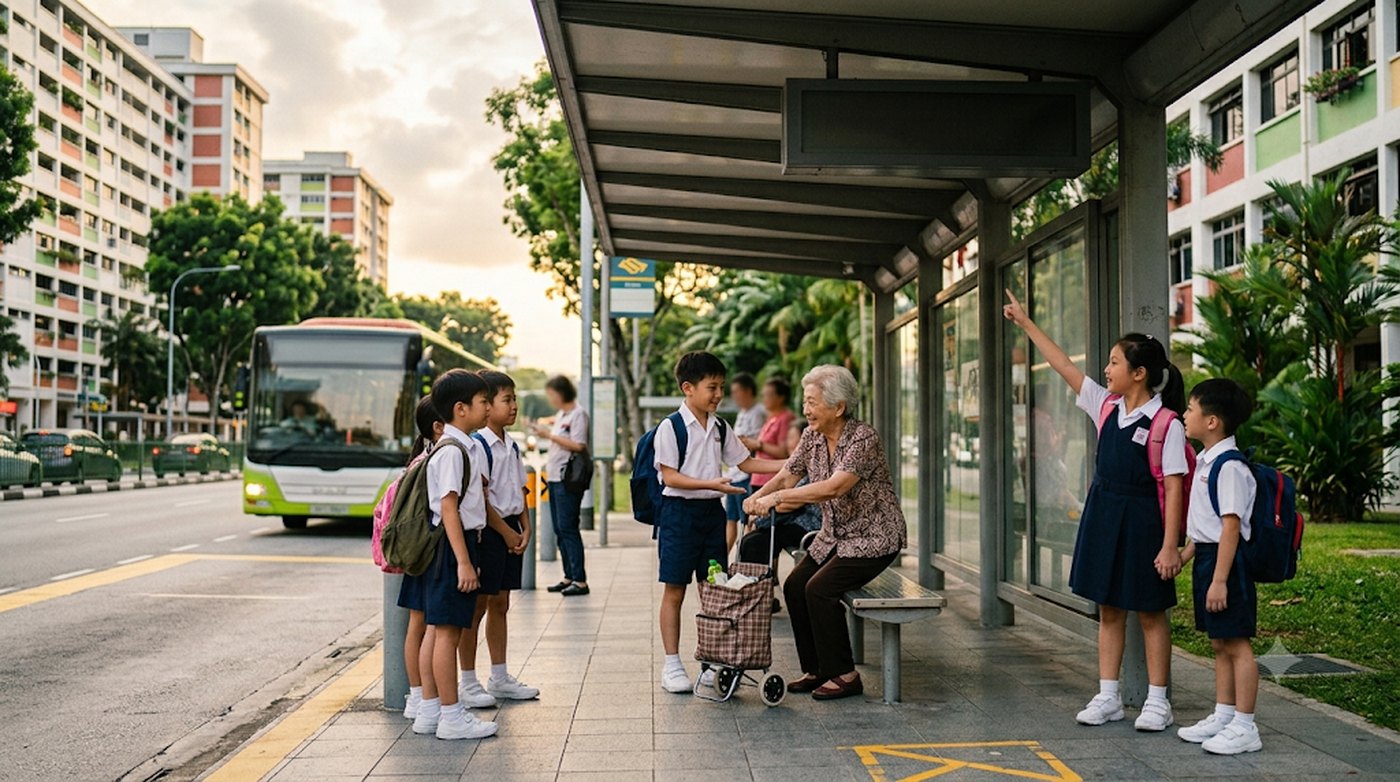
Waiting at the bus stop
Giving up a seat, queuing, and helping without being asked — the clearest test of graciousness there is.
→ 2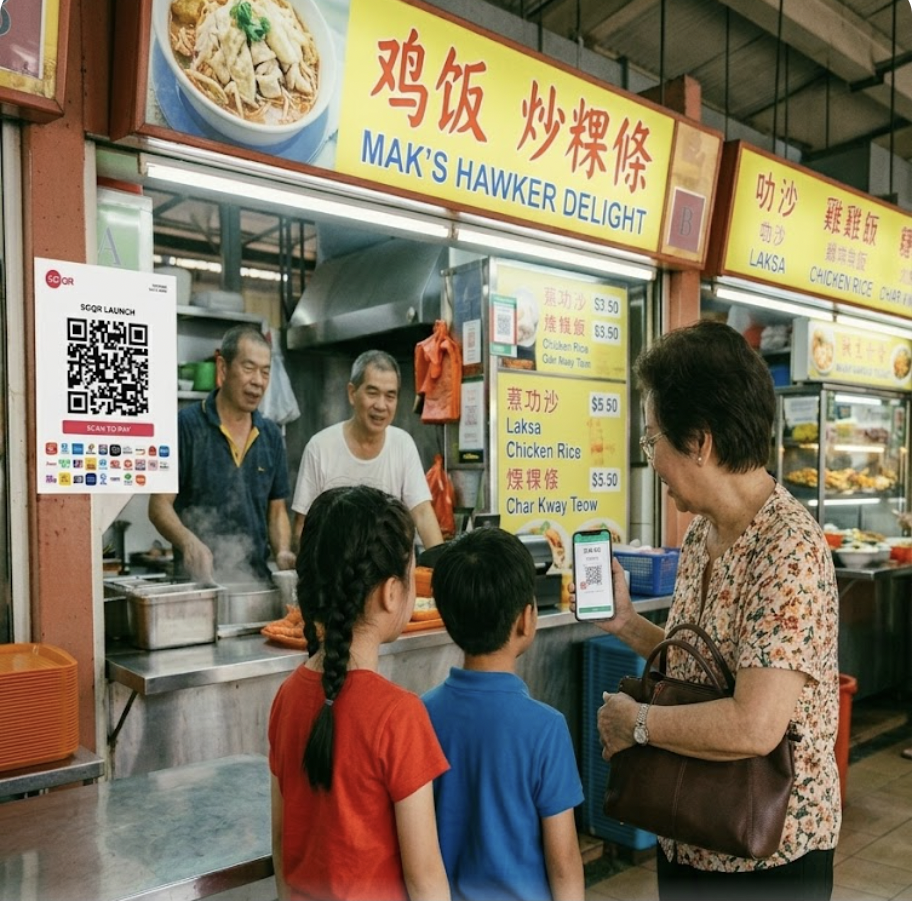
Paying by phone at the hawker centre
Cashless payment against stallholders who still prefer cash. A strong Q3 about whether convenience should remove a choice.
→ 3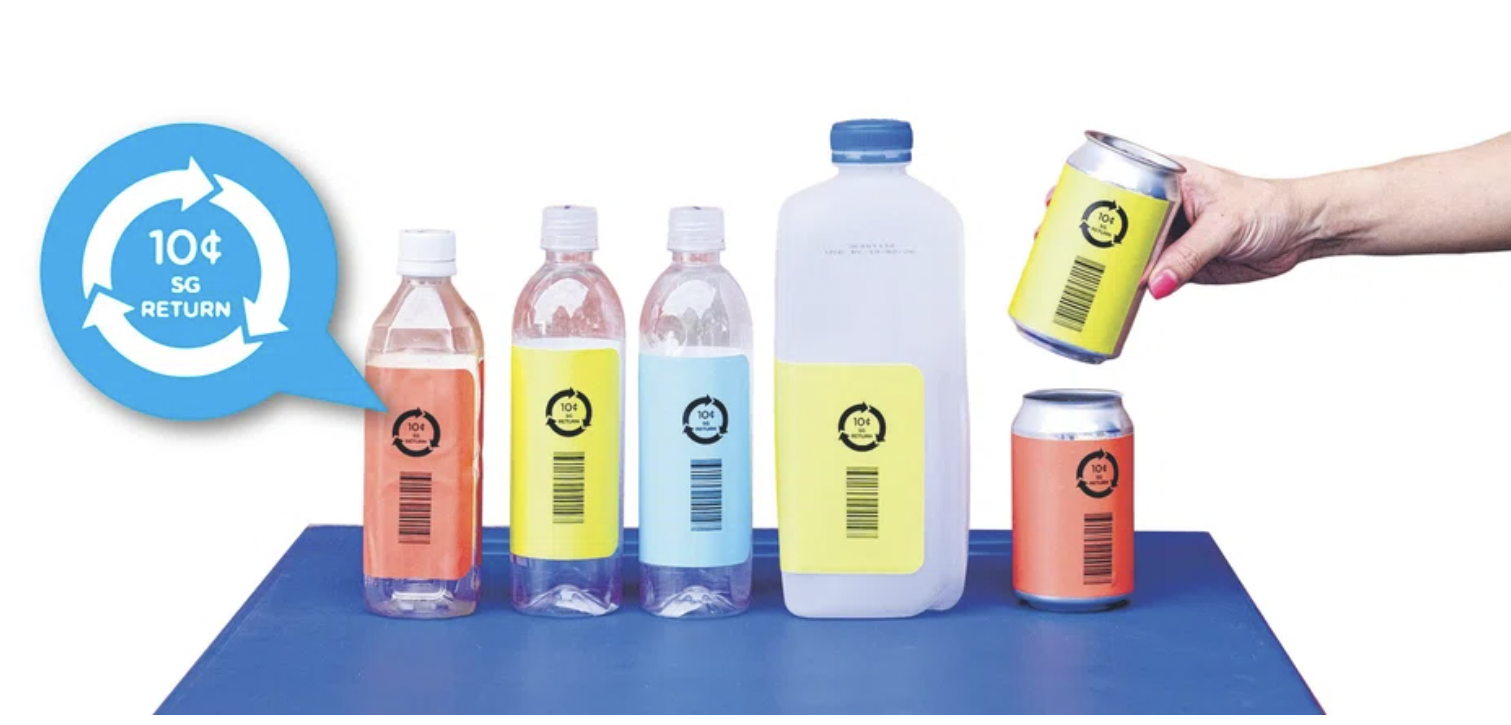
The beverage container deposit
The deposit-refund scheme is rolling out this year, so it will be in assemblies and the news.
→ 4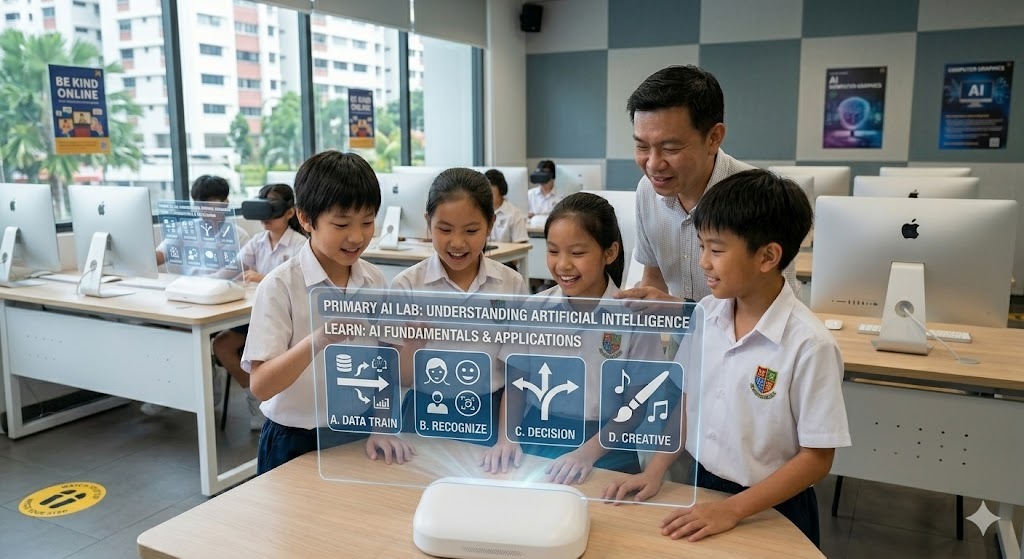
AI and learning
The most-discussed school topic right now, and a genuine values question rather than a factual one.
→ 5
Online scams and fake messages
A sustained national campaign, and one most children can answer from something that happened at home.
→Four of the five are already in the library with full model answers. Do one a night and you will have covered graciousness, money, environment, technology and online safety — five different vocabulary sets — in under an hour of practice.
Which themes to practise
Rather than guess at next week's photograph, here is how our 102 drills distribute across the themes that recur in school prelims and practice papers — and where the exam favourites cluster.
| Theme | Drills | ⭐ Favourites |
|---|---|---|
| 🤝 Community & Social Responsibility | 23 | 13 |
| 🏫 School & Education | 21 | 12 |
| ⚽ Sports & Recreation | 12 | 7 |
| 🎨 Arts, Culture & Heritage | 11 | 7 |
| 🍎 Health & Wellness | 9 | 5 |
| 💻 Technology & Innovation | 9 | 4 |
| 🏠 Family & Home | 9 | 4 |
| 🌱 Environment & Sustainability | 8 | 4 |
Community and school situations make up 43% of the library and nearly half the exam favourites — they are the safest place to start if you only have a few days. Technology, environment and family are thinner, and they are the ones a child is most likely to be unprepared for. Do one of each before Wednesday.
Results out in November — which schools are in range?
Enter your child's four PSLE subject grades on alscore.sg and see every secondary school within reach, using the latest 2026-intake cut-off points.