All topics School & Education

🏫 School & Education ⭐ Exam favourite ✍️ Full model answers

My Money, My Responsibility

Stimulus-based conversation practice · 3 questions · about 10 minutes

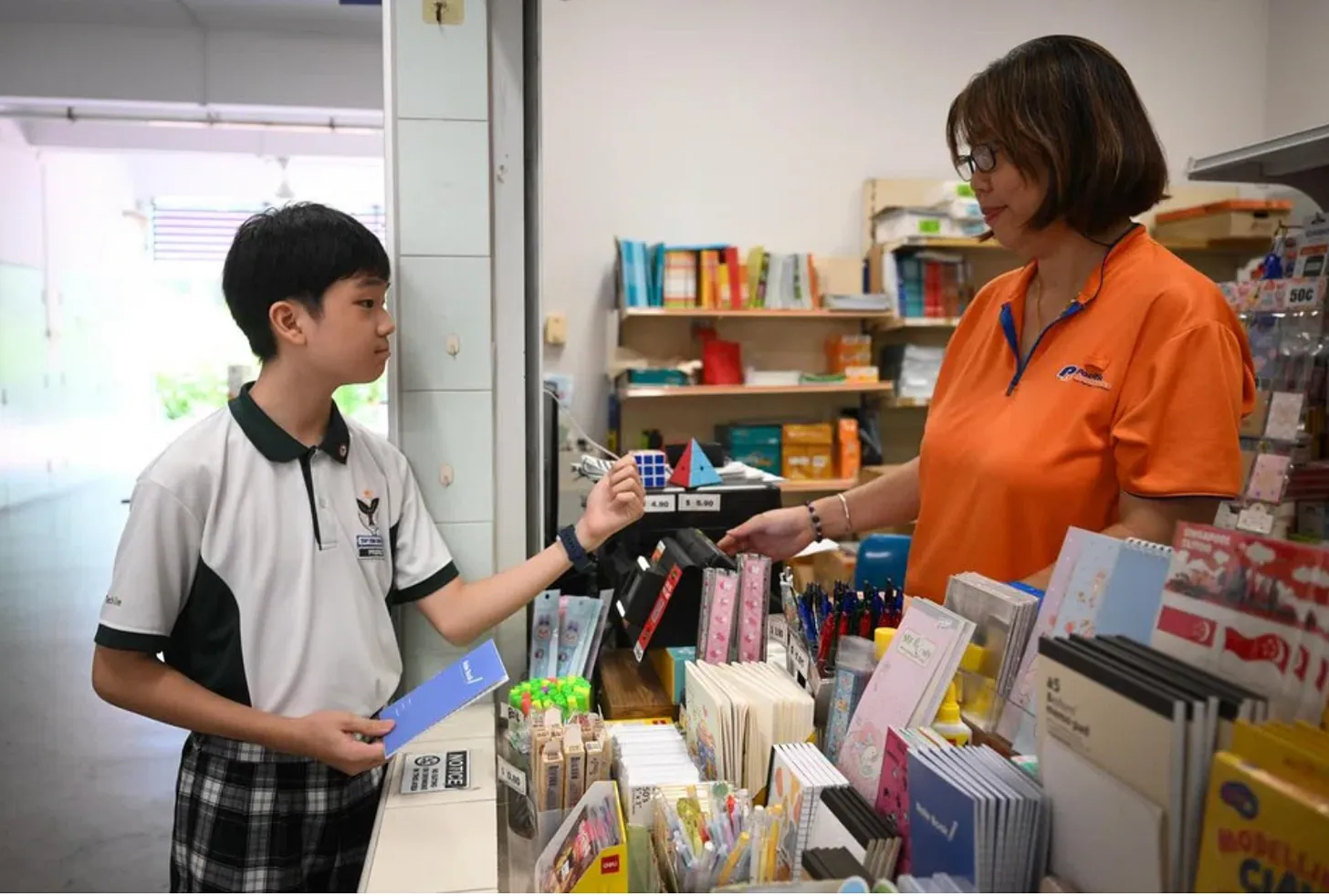
My Money, My Responsibility — PSLE oral stimulus picture
Let your child look at the picture for 30 seconds before the first question.

The questions

Ask these in order. Wait five full seconds after each one before helping — the silence is where the thinking happens.

Q1 Describe the stimulus

Look at the picture. What is the student doing, and why is this a common sight in schools today?

Look, name, and explain what you see — then add one detail nobody else would notice.

0:00
Model answer

In the picture, the student is using a debit card or a stored-value card to pay for something at school. This has become a common sight because many schools have moved to cashless payment, so students no longer carry coins and notes for recess. Parents can also top up the card from home and see what has been spent. What I also noticed is that the student is checking the receipt or the balance on the screen, which shows they are keeping track of their spending.

Why it scores

Explains the picture and the wider reason behind it, then notices the small responsible action.

Show the answer frame instead
  1. Point to what you see"In the picture, I can see…" — name two or three specific things, not just one.
  2. Explain what is happening"It looks like… because…" — link what you see to why it is happening.
  3. Add one closer detail"What I also noticed is…" — this is what lifts a plain answer into a strong one.
Q2 Relate it to yourself

Tell me how you manage your own pocket money or allowance.

Give a real example from your own life. Say what happened, then how you felt.

0:00
Model answer

I receive five dollars a week for pocket money. I try to spend about three dollars during recess and keep the rest in a small tin at home, though I will admit that some weeks I spend everything, especially if my friends are buying something after school. Since last year I have been writing down what I spend in the back of an old notebook. Seeing it written down made me realise how much went on drinks alone.

Why it scores

Real numbers, an honest admission of inconsistency, and a system with a genuine discovery from it.

Show the answer frame instead
  1. Set the scene"This reminds me of the time when…" — say when and where in one line.
  2. Say what you did"What I did was…" — one clear action, not a list.
  3. Say how it felt or what you learnt"After that, I felt… because…" — examiners are listening for this part.
Q3 Give your opinion

In your opinion, how can parents guide children to spend responsibly without controlling everything? Why?

Take a clear stand, give a reason, acknowledge the other side, then close.

0:00
Model answer

I feel parents can guide without controlling by teaching and then stepping back. One way is to give a fixed allowance and let the child decide how to use it, because you learn far more from running out of money on a Thursday than from being told what to buy. Parents can also talk about their own spending decisions out loud, so children see how adults weigh choices. Most importantly, they should let small mistakes happen, since a five-dollar mistake at twelve is a much cheaper lesson than a large one at twenty.

Why it scores

Names the principle, gives two methods, then closes with a comparison that makes the argument stick.

Show the answer frame instead
  1. Take a clear stand"I feel that… / I agree that…" — never start with "maybe".
  2. Give your strongest reason"This is because…" — one solid reason beats three weak ones.
  3. Show you see the other side"I understand why some people feel that…, however…" — this shows maturity.
  4. Close it"That is why I believe…" — a proper ending, not a trailing off.

Useful phrases for this topic

Frames your child can use while answering these questions. Tap any phrase to copy it.

  • In the picture, the student is…
  • This often happens in school when…
  • In my own experience…
  • What I would do differently is…
  • A better way would be to…
  • It teaches us that…
  • What I also noticed is…
  • This reminds me of the time when…
  • I understand why some people feel that way, however…
  • That is why I believe…

Common mistakes on this kind of question

Blaming someoneAnswers that point fingers score lower than ones that suggest what could be done.
A story with no consequenceSay what happened afterwards — that is where the learning shows.
Answering as an adultSpeak as a student. Your own school experience is exactly what is being asked for.
Answering in one line"Yes, I would." A full answer needs a reason and an example — aim for three or four sentences.
No reason givenEvery opinion needs a "because". Without it, the answer sounds like a guess.

Parent script — how to run this in 10 minutes

  1. Show the picture. Say nothing for 30 seconds.
  2. Ask Q1 exactly as written. Count to five in your head before you help.
  3. After the answer, ask "why?" once more. That single word usually doubles the answer.
  4. Repeat for the remaining questions.
  5. Finish with one thing that was good and one thing to try next time. Only one of each.

More topics like this

All 102 drills are free · No account · No payment

Want one picked for you each week?

Choosing between 102 drills at 8pm on a school night is its own problem. Leave your email and we will send one drill every Monday — nothing else, and you can stop any time.

One email a week. No spam, no sharing of your address.