All topics Sports & Recreation

⚽ Sports & Recreation ✍️ Full model answers

Swimming Lessons

Stimulus-based conversation practice · 3 questions · about 10 minutes

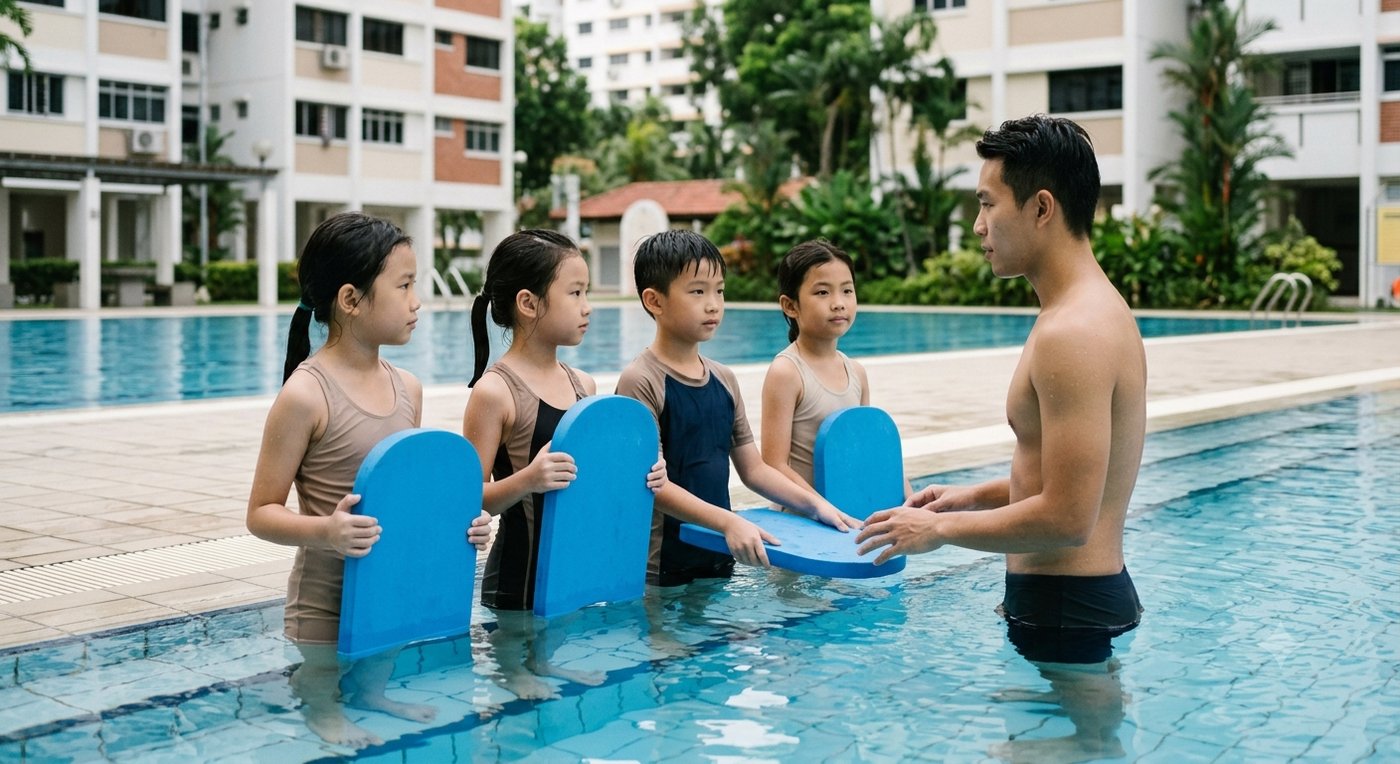
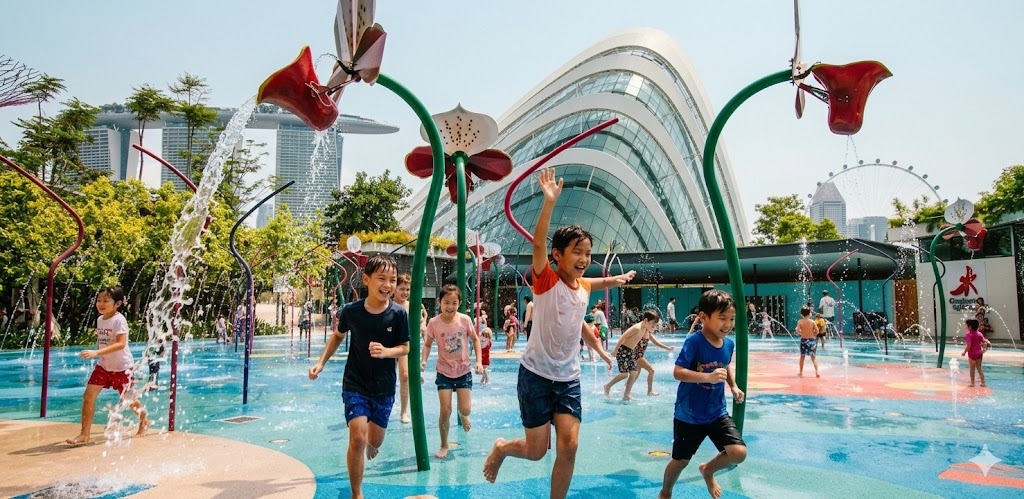
Swimming Lessons — PSLE oral stimulus picture
Let your child look at the picture for 30 seconds before the first question.

The questions

Ask these in order. Wait five full seconds after each one before helping — the silence is where the thinking happens.

Q1 Describe the stimulus

Look at the picture. What are the children learning, and how is the instructor helping?

Look, name, and explain what you see — then add one detail nobody else would notice.

0:00
Model answer

In the picture, the children are having a swimming lesson at a public pool. Four of them are standing in the shallow water at the edge holding blue kickboards, and the instructor is standing in the water facing them, showing them what to do. The children are looking at the instructor and listening rather than swimming yet. What I also noticed is that they are all within the shallow end where they can stand, so the lesson is being conducted safely.

Why it scores

Answers both halves — what they are learning and how the instructor helps — then notes the safety detail.

Show the answer frame instead
  1. Point to what you see"In the picture, I can see…" — name two or three specific things, not just one.
  2. Explain what is happening"It looks like… because…" — link what you see to why it is happening.
  3. Add one closer detail"What I also noticed is…" — this is what lifts a plain answer into a strong one.
Q2 Relate it to yourself

Tell me about learning to swim, or another skill you had to practise many times.

Give a real example from your own life. Say what happened, then how you felt.

0:00
Model answer

I learnt to swim when I was eight, and the hardest part was putting my face in the water. For weeks I would practise the kicking with a board but lift my head every time, and my instructor kept telling me to blow bubbles out slowly instead of holding my breath. One lesson I finally managed a full lap with my face down, and I remember being shocked that it was easier, not harder. Now I swim on most weekends and I cannot imagine being afraid of it.

Why it scores

Names the exact difficulty, the specific advice that worked, and the surprise that came with mastering it.

Show the answer frame instead
  1. Set the scene"This reminds me of the time when…" — say when and where in one line.
  2. Say what you did"What I did was…" — one clear action, not a list.
  3. Say how it felt or what you learnt"After that, I felt… because…" — examiners are listening for this part.
Q3 Give your opinion

Do you think every child in Singapore should learn to swim? Why?

Take a clear stand, give a reason, acknowledge the other side, then close.

0:00
Model answer

Yes, I feel every child in Singapore should learn. We are surrounded by water, with beaches, reservoirs and swimming pools in almost every neighbourhood, so the chance of ending up in water is high. Swimming is one of the few skills that can save your life or someone else's, and it is far easier to learn as a child than as an adult. Most importantly, a child who cannot swim often avoids water activities entirely, which means missing out on a great deal that Singapore has to offer.

Why it scores

Safety argument, timing argument, then an unexpected point about what non-swimmers miss.

Show the answer frame instead
  1. Take a clear stand"I feel that… / I agree that…" — never start with "maybe".
  2. Give your strongest reason"This is because…" — one solid reason beats three weak ones.
  3. Show you see the other side"I understand why some people feel that…, however…" — this shows maturity.
  4. Close it"That is why I believe…" — a proper ending, not a trailing off.

Useful phrases for this topic

Frames your child can use while answering these questions. Tap any phrase to copy it.

  • In the picture, the players are…
  • You can tell from their…
  • When I took part in…
  • What helped me most was…
  • Even if we did not win…
  • What matters more than the result is…
  • What I also noticed is…
  • This reminds me of the time when…
  • I understand why some people feel that way, however…
  • That is why I believe…

Common mistakes on this kind of question

Only talking about winningExaminers listen for sportsmanship, effort and how you handled the result.
Describing the game instead of answeringCommentary on the action is not the same as answering the question asked.
A story with no difficultyThe best sports answers include the part where it was hard, tiring or disappointing.
Answering in one line"Yes, I would." A full answer needs a reason and an example — aim for three or four sentences.
No reason givenEvery opinion needs a "because". Without it, the answer sounds like a guess.

Parent script — how to run this in 10 minutes

  1. Show the picture. Say nothing for 30 seconds.
  2. Ask Q1 exactly as written. Count to five in your head before you help.
  3. After the answer, ask "why?" once more. That single word usually doubles the answer.
  4. Repeat for the remaining questions.
  5. Finish with one thing that was good and one thing to try next time. Only one of each.

More topics like this

All 102 drills are free · No account · No payment

Want one picked for you each week?

Choosing between 102 drills at 8pm on a school night is its own problem. Leave your email and we will send one drill every Monday — nothing else, and you can stop any time.

One email a week. No spam, no sharing of your address.