All topics Sports & Recreation

⚽ Sports & Recreation ⭐ Exam favourite ✍️ Full model answers

Playing on The Road

Stimulus-based conversation practice · 3 questions · about 10 minutes

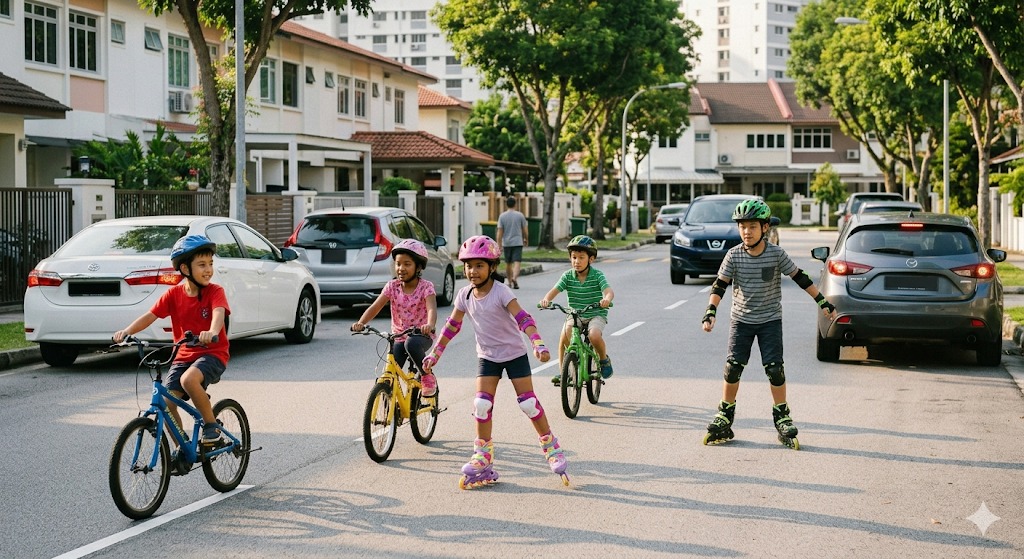
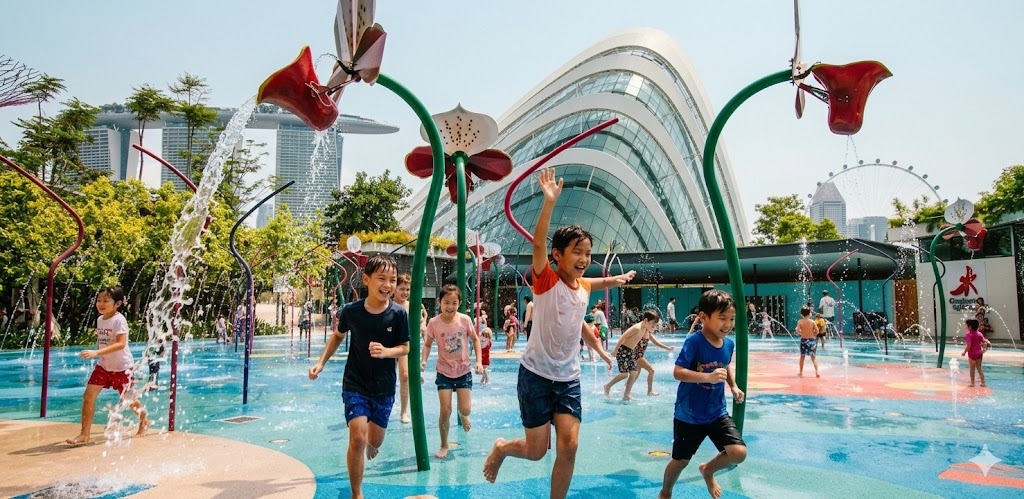
Playing on The Road — PSLE oral stimulus picture
Let your child look at the picture for 30 seconds before the first question.

The questions

Ask these in order. Wait five full seconds after each one before helping — the silence is where the thinking happens.

Q1 Describe the stimulus

Look at the picture. What are the children doing, and do you think it is safe? Why?

Look, name, and explain what you see — then add one detail nobody else would notice.

0:00
Model answer

In the picture, a group of children is playing football on a residential road between parked cars. I do not think it is safe, because a car could come round the corner at any moment and the parked vehicles block both the driver's view and the children's. The ball could also roll under a car and a child might run after it without looking. What I also noticed is that there are no adults nearby watching, so there is nobody to warn them if a vehicle approaches.

Why it scores

Answers directly, gives two specific mechanisms of danger, then notices the missing supervision.

Show the answer frame instead
  1. Point to what you see"In the picture, I can see…" — name two or three specific things, not just one.
  2. Explain what is happening"It looks like… because…" — link what you see to why it is happening.
  3. Add one closer detail"What I also noticed is…" — this is what lifts a plain answer into a strong one.
Q2 Relate it to yourself

Tell me about where you usually play with your friends after school.

Give a real example from your own life. Say what happened, then how you felt.

0:00
Model answer

My friends and I usually play at the void deck of my block after school, because there is shelter and it is right beside our homes. Once our ball hit a neighbour's bicycle and knocked it over, and although nothing was damaged, an uncle came out and told us to be careful. After that we started playing at the small court behind the block instead, which is further but much better because nothing gets in the way. It was a fair reminder that the void deck is shared with everyone.

Why it scores

An honest incident, a sensible change of habit, and an understanding of shared space.

Show the answer frame instead
  1. Set the scene"This reminds me of the time when…" — say when and where in one line.
  2. Say what you did"What I did was…" — one clear action, not a list.
  3. Say how it felt or what you learnt"After that, I felt… because…" — examiners are listening for this part.
Q3 Give your opinion

In your opinion, what can be done to give children safer places to play? Why?

Take a clear stand, give a reason, acknowledge the other side, then close.

0:00
Model answer

I feel a few things can help. Firstly, more small play areas within housing estates would help, because children play near home and will not walk far to reach a proper field. Secondly, existing spaces such as void decks and courts could be better maintained and lit in the evenings, since many are unused simply because they feel unwelcoming. Most importantly, children need somewhere they are allowed to be noisy, because if every space has rules against ball games, they end up on the road, which is the most dangerous option of all.

Why it scores

Three graded solutions, and the closing point identifies the real cause rather than blaming the children.

Show the answer frame instead
  1. Take a clear stand"I feel that… / I agree that…" — never start with "maybe".
  2. Give your strongest reason"This is because…" — one solid reason beats three weak ones.
  3. Show you see the other side"I understand why some people feel that…, however…" — this shows maturity.
  4. Close it"That is why I believe…" — a proper ending, not a trailing off.

Useful phrases for this topic

Frames your child can use while answering these questions. Tap any phrase to copy it.

  • In the picture, the players are…
  • You can tell from their…
  • When I took part in…
  • What helped me most was…
  • Even if we did not win…
  • What matters more than the result is…
  • What I also noticed is…
  • This reminds me of the time when…
  • I understand why some people feel that way, however…
  • That is why I believe…

Common mistakes on this kind of question

Only talking about winningExaminers listen for sportsmanship, effort and how you handled the result.
Describing the game instead of answeringCommentary on the action is not the same as answering the question asked.
A story with no difficultyThe best sports answers include the part where it was hard, tiring or disappointing.
Answering in one line"Yes, I would." A full answer needs a reason and an example — aim for three or four sentences.
No reason givenEvery opinion needs a "because". Without it, the answer sounds like a guess.

Parent script — how to run this in 10 minutes

  1. Show the picture. Say nothing for 30 seconds.
  2. Ask Q1 exactly as written. Count to five in your head before you help.
  3. After the answer, ask "why?" once more. That single word usually doubles the answer.
  4. Repeat for the remaining questions.
  5. Finish with one thing that was good and one thing to try next time. Only one of each.

More topics like this

All 102 drills are free · No account · No payment

Want one picked for you each week?

Choosing between 102 drills at 8pm on a school night is its own problem. Leave your email and we will send one drill every Monday — nothing else, and you can stop any time.

One email a week. No spam, no sharing of your address.